Bleached Buzz Cut: The Complete Guide to Length, Color, and Maintenance
Last updated: August 2026
A bleached buzz cut isn’t one fixed hairstyle — it’s a combination of choices. How short the clippers go, how light the color gets, and how the two are blended together (fade, taper, roots left in, or fully bleached) all change the outcome. This guide walks through each of those choices separately, so you can put together a look that actually fits your hair rather than copying a single reference photo and hoping for the same result.
Key Takeaways
- A bleached buzz cut is really four separate decisions: guard length, blonde shade, root treatment, and side/back styling.
- Bleach lightens hair by removing pigment; hair dye adds color — they are not interchangeable, and dye alone can’t take dark hair to platinum.
- The starting hair color and any previous chemical treatment determine how many sessions a pale or platinum result actually takes.
- Maintenance splits into three separate tasks: haircut trims, root touch-ups, and toning — not one generic “low maintenance” routine.
- Regrowth shows up faster on a buzz cut than on longer hair simply because there’s less length to buffer the transition.
What Is a Bleached Buzz Cut? (Quick Answer)
A bleached buzz cut is a very short clipper haircut where the hair has been lightened with bleach rather than colored with standard dye. The buzz length can range from a close #1 to a longer #6 or more, and the resulting shade can land anywhere from warm honey-blonde to pale platinum. The final look depends on the starting hair color, hair condition, and how the lightening is processed — it isn’t one guaranteed color or one guaranteed length.
Quick Finder
| If you want to know… | Go to… |
|---|---|
| What “bleached buzz cut” actually means | Definition |
| Bleach vs. regular hair dye | Bleach vs. Hair Dye |
| What guard length to pick | Length & Guard Guide |
| Which blonde shade to choose | Blonde Shade Guide |
| Whether dark or black hair can go platinum | Starting Hair Color |
| Combining bleach with a fade or taper | Fades, Tapers & All-Over Bleach |
| What happens to your roots | Dark Roots & Regrowth |
| How to keep it looking good | Maintenance |
| Whether it’ll show your scalp | Scalp & Hairline |
| Rough cost and time expectations | Cost & Time |
| What to say to your barber or colorist | Talking to Your Barber or Colorist |
| Common questions | FAQ |
What Is a Bleached Buzz Cut?
“Buzz cut” is the haircut: hair clipped uniformly short, usually with a guard attachment that sets the length. “Bleached” is the color: a chemical lightening process that strips pigment out of the hair shaft, rather than adding color the way a standard dye does. Because these are independent decisions, “bleached buzz cut” is shorthand for a combination of variables:
- Guard length — how short the clippers go
- Color level — how light the bleach lifts the hair (warm blonde through platinum)
- Root treatment — bleached to the root, or roots left natural for contrast
- Side/back treatment — all-over buzz, faded sides, or a tapered edge
Two people can both ask for a “bleached buzz cut” and leave with visibly different results, because they’ve made different choices along each axis. Treating it as a set of decisions — not a single fixed style — is what makes it possible to communicate clearly with a barber or colorist.
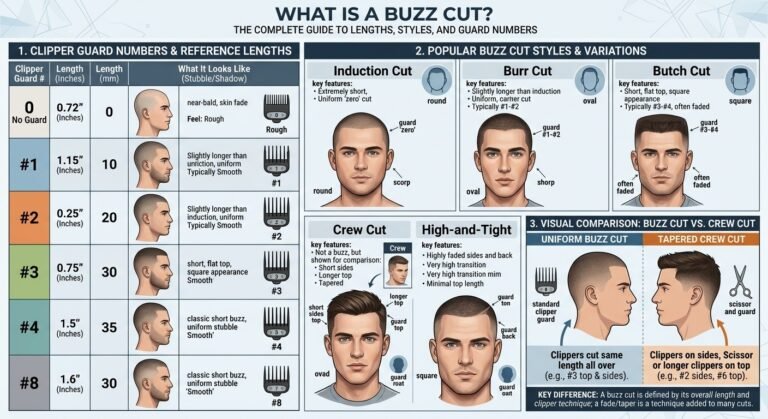
Related: What Is a Buzz Cut? The Complete Guide to Lengths, Styles, and Guard Numbers
Bleach vs. Hair Dye
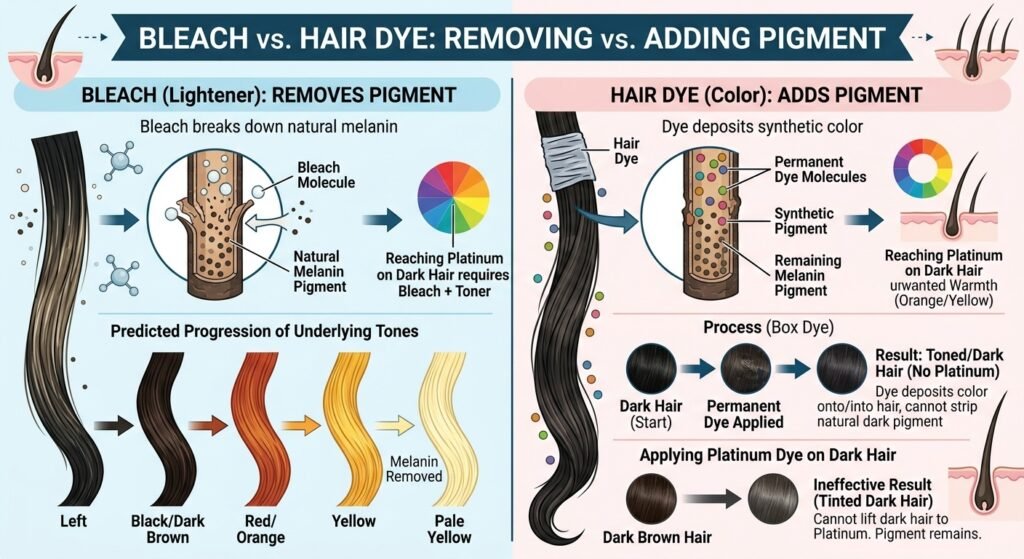
Bleach removes pigment. Dye adds it. That one distinction explains most of the confusion around this topic.
Bleach (lightener) breaks down the natural pigment (melanin) inside the hair shaft, lifting it through a predictable progression of underlying tones — from black or dark brown, through red and orange, to yellow and eventually pale yellow.
Hair dye deposits color onto or into the hair. A permanent dye can sometimes lighten a shade or two, but it cannot pull dark hair up to a pale blonde or platinum result, because it isn’t designed to strip pigment the way a dedicated lightener is.
This is why a box of “platinum blonde” dye applied straight over dark brown or black hair typically won’t produce platinum hair — it may add a tint, but the underlying dark pigment stays largely in place. Reaching a genuinely light blonde or platinum result on dark hair almost always requires an actual bleaching process, often followed by a toner to neutralize unwanted warmth.
How Short Should a Bleached Buzz Cut Be?
There’s no single “correct” length. The right guard size depends on how much scalp visibility, texture, and root contrast you want, and how the color reads at that length.
- Very short lengths show more scalp and skin tone through the hair, so the color reads as a fairly flat, uniform wash of blonde. Regrowth also becomes visible sooner, since there’s so little length to begin with.
- Short-to-medium lengths still read as a clear buzz cut but carry more hair mass, so the blonde starts to show subtle texture and light reflection rather than a completely flat tone.
- Longer buzz lengths show the most texture and dimension. You’ll notice more variation in how the color catches light, and any regrowth or tonal shift is more visible because there’s more hair to display it.
None of these is objectively better — it comes down to how much scalp contrast you want and how often you’re willing to have it maintained.
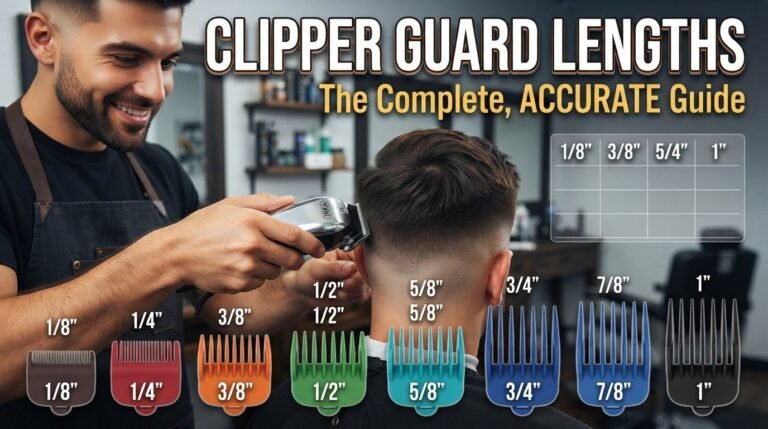
Guard Length Reference (Approximate)
Clipper guard sizing is fairly standardized in the US, but confirm with your barber, since brands and blade settings can vary slightly.
| Guard | Approx. length | Visual effect once bleached |
|---|---|---|
| #1–#2 | ~1/8″–1/4″ | Maximum scalp visibility; color reads almost like a flat wash; regrowth shows quickly |
| #3–#4 | ~3/8″–1/2″ | Classic buzz-cut look; scalp still visible but less dominant; some visible texture |
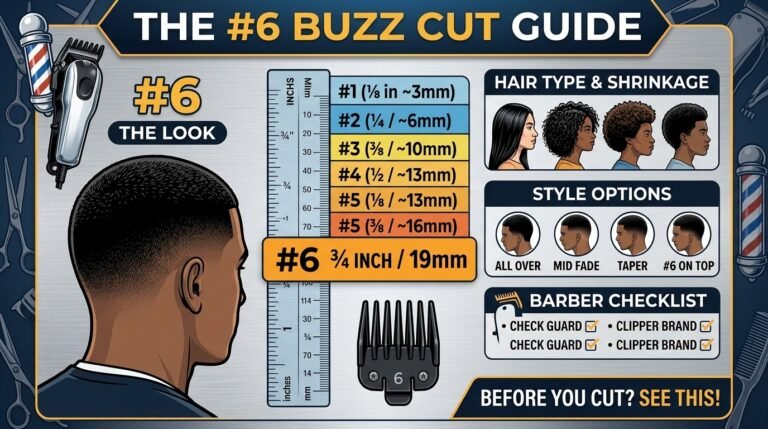
| #5–#6 | ~5/8″–3/4″ | Noticeably more hair coverage; texture and light-catching dimension become more obvious |
| #8 and longer | 1″+ | Reads more as a very short crop than a traditional buzz; most texture, most visible regrowth line over time |
Shorter guards generally mean less maintenance for the haircut itself but faster-appearing color regrowth, since there’s so little length to buffer the transition between bleached hair and new growth.
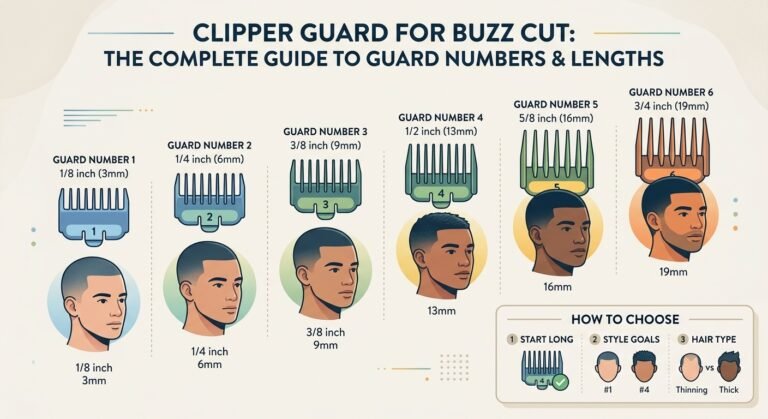
Also READ: Clipper Guard for Buzz Cut: The Complete Guide to Guard Numbers, Lengths, and How to Choose
Blonde Shade Guide
“Blonde” covers a wide range of results, and the words used to describe them describe genuinely different visual outcomes — not interchangeable synonyms.
| Shade direction | General appearance | Typically flatters | Note |
|---|---|---|---|
| Warm/golden blonde | Yellow, honey, or beige undertones | Warmer skin tones (a preference, not a rule) | Often the “easiest” stopping point for hair with a lot of pigment to lift through |
| Neutral blonde | Balanced, minimal strong warm or cool cast | Broadly wearable | A middle-ground target between warm and ash |
| Ash/cool blonde | Muted, smoky, less yellow | Cooler skin tones (a preference, not a rule) | Usually needs a cool-toned toner over the lifted hair |
| Pale blonde | Very light, low pigment remaining | — | Requires significant lift on darker starting hair |
| Platinum blonde | Extremely pale, almost no visible warmth | — | The end point of the lightening scale — see below |
| Silver/gray-toned blonde | Cool, metallic-looking cast | — | Achieved with a silver/gray toner over very light hair |
No shade here is universally “best” — it’s a matter of preference, skin tone, and how much processing your hair can realistically handle.
Related: 6 Guard Buzz Cut: Length, Look, and Everything to Know Before You Get One
Platinum Blonde Buzz Cut
Platinum is the palest point on the blonde spectrum, and it’s especially striking on a buzz cut because there’s so little hair mass to soften the contrast between skin, scalp, and color.
- It’s rarely a single-session result on dark hair. Hair with substantial natural pigment typically passes through visibly warmer stages (orange, yellow) before reaching a level pale enough for platinum to look clean rather than yellow.
- It shows root contrast fastest. With almost no color left to bridge the gap, new growth is highly visible against platinum — often within a couple of weeks on a very short buzz.
- It usually needs a toner. Lifted hair on its own often carries a yellow or pale-orange undertone; a violet-based toner pushes it toward the icy-white look most people picture as “platinum.”
A stylist assessing your hair in person — your natural level, any previous color, and current condition — is the only reliable way to know how many sessions platinum will realistically take.
Starting Hair Color: What to Actually Expect
Starting color is the single biggest factor in how a bleached buzz cut looks, and it’s the area where style guides most often oversell what bleach can do.
Light or medium blonde hair generally needs the least lightening to reach a pale or platinum result, since there’s relatively little underlying pigment to remove.
Brown hair contains substantially more pigment. Depending on depth, reaching pale blonde can mean passing through orange and yellow stages first, with a toner needed at the end to control warmth.
Very dark brown or black hair contains the most pigment to lift through, and pale or platinum results are the most demanding to achieve safely. The honest answer to “can black hair reach platinum on a buzz cut” is: often yes, over more than one session, with professional assessment — but not reliably in a single pass without risking real damage.
Previously colored or bleached hair is its own category. Old color pigment can interact unpredictably with new bleach, and hair that’s already somewhat compromised has less structural margin for another chemical process. This is exactly the detail a colorist needs before you sit in the chair — and one of the most commonly skipped topics in casual style guides.
None of this rules out dramatic transformations — they’re very often possible. It just means the session count, intermediate stages, and final achievable shade are individual to your hair, not something a photo of someone else’s result can promise.
Fades, Tapers & All-Over Bleach
Bleaching and fading are separate techniques that combine in a few common ways:
- Bleached top, faded sides. Bleach concentrates on the longer top section; the sides and back clip down to skin in a graduated fade, creating clear separation between the color block and the haircut shape.
- Fully bleached with a fade. The entire head, including the faded sides, is lightened, so the fade is defined by length and shadow rather than color contrast.
- Natural or tapered sides with bleached top. Sides keep their natural color and a soft taper (a gentler transition than a fade), so the bleached section sits on a natural-colored base.
- All-over, uniform buzz. Same guard length and lightening level across the whole head for one consistent color block — detailing at the neckline and ears can still be handled separately.
None of these is a “standard” named haircut — they’re combinations you describe based on how much contrast and definition you want.
Dark Roots & Regrowth
New hair always grows in at its natural, unbleached color, since bleach only affects the hair it’s applied to. That means a dark-root look is regrowth — intentional or not.
Some people plan the contrast deliberately, keeping roots visible as part of the style. Others prefer the color blended to the root, with regular touch-ups to avoid a visible line. Both are legitimate; the difference is maintenance frequency, not correctness.
On a buzz cut specifically, regrowth becomes visually noticeable faster than on longer hair, simply because there’s so little length overall — a few millimeters of dark growth is a much larger share of a #2 buzz than of hair several inches long.
Maintenance
“Low maintenance” is a common oversimplification. Three separate things actually need upkeep:
Styling maintenance is genuinely low — this part of the reputation is accurate. Short hair needs little to no daily styling.
Haircut maintenance depends on how tightly you want the buzz shape kept. Hair grows regardless of color, so a crisp, uniform length still means regular trims, at an interval set by your growth rate and tolerance for length variation.
Color maintenance is the part most often underestimated:
- Root touch-ups as natural color grows in
- Toning to manage unwanted warmth (pale shades especially tend to develop yellow or brassy undertones over time)
- Shampoo and conditioner formulated for chemically treated hair, since standard products can be drying on processed strands
- Spacing out bleach sessions rather than stacking them close together on the same hair
There’s no single universal touch-up schedule — it depends on your growth rate, tolerance for root contrast, and how light your target shade is (paler shades generally show contrast and brassiness faster).
Toning
Bleached hair, especially at pale or platinum levels, commonly develops warmth over time from washing, sun, and air exposure. A violet-based (“purple”) toner or toning shampoo typically counteracts yellow tones, while a blue-based toner addresses orange undertones. Which one — and how often — depends on your current level and how fast warmth reappears, which is worth confirming with whoever colored your hair.
<a id=”scalp-hairline”></a>
Scalp & Hairline Visibility
Short buzz lengths naturally show more scalp than longer hair, and bleaching adds color contrast on top of that. How prominent this looks depends on guard length, hair density, skin tone, and lighting — it plays out differently for everyone, so treat any single reference photo as an example rather than a guarantee.
Very light hair color also tends to make the hairline, temples, and any natural irregularities in hair growth more visually noticeable than dark hair does, simply because of the contrast against skin. This is a cosmetic visibility effect, not something bleaching treats or changes structurally.
Sensitive scalp: because clipper guards sit close to the skin and lightener is applied near the scalp, anyone with a history of scalp sensitivity, irritation, or product reactions should flag that to their colorist beforehand. A patch or strand test may be appropriate depending on the product — this isn’t something to self-diagnose; it’s a professional’s call.
Does Face Shape Matter?
Buzz cuts, bleached or not, work across a wide range of face shapes — oval, round, square, diamond, heart, and oblong. What changes the look more than face shape alone is guard length, how the sides are treated (faded, tapered, or left longer), and how the hairline is defined. Use face shape as a starting point for discussion with your barber, not a rule about who “can” or “can’t” wear the style.
Pros and Cons
| Potential advantages | Potential trade-offs |
|---|---|
| Distinctive, high-impact look | Regrowth is often noticeable quickly on short hair |
| Minimal daily styling | Significant lightening can stress hair, especially if dark or previously colored |
| Works across many guard lengths | Pale/platinum tones need active brassiness management |
| Pairs well with fades or tapers | Root contrast can be strong if touch-ups are skipped |
| Haircut itself is low-effort to maintain | Color maintenance is a separate, ongoing commitment |
| Regular trims remove some bleach-processed length over time | Very short lengths expose more scalp, which not everyone wants |
Who Tends to Like This Style
People drawn to a bleached buzz cut are usually after a bold, low-daily-effort haircut, a strong color statement, or a way to pair a short cut with a fade or taper for extra definition. It suits anyone comfortable with visible scalp, regular touch-up maintenance, and a haircut that reads as intentional rather than grown-out.
Cost & Time Considerations
Two separate services are usually involved — the haircut and the color — and shops may bill them separately. A professional lightening session on a buzz cut is typically faster than on long hair simply because there’s less volume to process, but reaching a pale or platinum result from dark hair may still take more than one appointment, which affects both total time and total cost.
DIY kits cost less upfront but shift the risk — even application, correct timing, scalp safety — onto you. If you’re weighing DIY against a salon, factor in not just the first service but any follow-up toning or root-touch-up visits you’ll likely want within the first month, since those are part of the real ongoing cost of the look, not optional extras.
Talking to Your Barber or Colorist
Not every barber performs chemical color services, and not every colorist cuts hair — in many shops, the two are handled by different people or scheduled as separate appointments. Ask ahead whether one professional can do both.
What to bring to the conversation
- Desired guard length (e.g., “a #4 all over”)
- Desired color direction (warm blonde, ash blonde, platinum — use the language from the shade guide)
- Root preference (blended to the root, or deliberate dark-root contrast)
- Side/back treatment (all-over, faded, or tapered)
- Hair history — any previous color, bleaching, or chemical treatment, even if it was a while ago
- A reference photo, or several
Example ways to phrase the request
“I want a #4 buzz cut all over with a warm blonde result — my hair’s never been colored before.”
“I’d like a short buzz with a platinum finish and a low fade on the sides. I bleached it once before about six months ago.”
“I want to keep a bit more length on top, bleach that section, and taper the sides to my natural color.”
Building a reference photo set
A single photo rarely communicates everything a stylist needs. A stronger set includes a front view, a side profile, and — if a fade or taper is involved — a close-up of that transition. If root contrast is part of the look, include a photo showing exactly how much natural color stays visible. Reference photos communicate the look you want, but the exact result is still shaped by your own starting hair — that’s normal, not a failure of the reference.
Order of Service: Cut First or Bleach First?
There’s no universal rule — the right order depends on the specific look.
- If you’re keeping your current length and just adding color, bleaching first and buzzing after is common.
- If you’re dramatically shortening your hair in the same appointment, many professionals cut first, since it’s more efficient to process shorter hair and reduces chemical exposure needed.
- If a fade or taper is being cut into already-bleached hair, the color is sometimes applied on slightly longer hair first, with the fade cut in afterward to blend the transition cleanly.
Whoever is doing the work is the best judge of sequencing for your specific combination of length change and color goal — it’s reasonable to ask directly rather than assume.
12 Bleached Buzz Cut Style Ideas
1. Classic bleached buzz — Haircut: uniform #3–#4. Color: neutral to warm blonde. Effect: clean, versatile. Maintenance: moderate.
2. Platinum all-over buzz — Haircut: uniform #2–#4. Color: platinum with toner. Effect: maximum contrast. Maintenance: high.
3. Bleached #1–#2 micro buzz — Haircut: very close, high scalp visibility. Color: any blonde. Effect: flat, minimalist color block. Maintenance: moderate on color; regrowth shows fast.
4. Bleached #6 textured buzz — Haircut: longer, textured. Color: warm or neutral blonde. Effect: more dimension and movement. Maintenance: moderate.
5. Bleached buzz with low fade — Haircut: bleached top, low fade. Color: any blonde. Effect: subtle color-to-fade separation. Maintenance: moderate–high.
6. Bleached buzz with high fade — Haircut: bleached top, aggressive high fade. Color: any blonde. Effect: strong, graphic contrast. Maintenance: high.
7. Bleached buzz with soft taper — Haircut: bleached top, gently tapered sides. Color: warm or neutral blonde. Effect: understated. Maintenance: moderate.
8. Platinum top, natural dark sides — Haircut: bleached top only. Color: platinum crown, natural elsewhere. Effect: bold two-tone contrast. Maintenance: high on the bleached section.
9. Platinum with deliberate dark roots — Haircut: any buzz length. Color: platinum lengths, roots left unbleached. Effect: rooted, lived-in look. Maintenance: lower than fully blended platinum.
10. Ash-blonde buzz — Haircut: any length. Color: cool, muted blonde via toner. Effect: smoky, less warm than golden blonde. Maintenance: moderate–high (ash can shift warm again).
11. Warm/golden blonde buzz — Haircut: any length. Color: honey/golden undertone left in. Effect: softer than platinum. Maintenance: moderate; often an easier stopping point on darker hair.
12. Grown-out bleached buzz — Haircut: buzz left a few weeks past its last trim. Color: bleached ends with visible regrowth. Effect: intentional-looking transitional style. Maintenance: low by design.
Color Decision Table
| You want… | Consider… | Main factor to plan around |
|---|---|---|
| A natural-looking result | Warm or neutral blonde | Your starting color sets the “easiest” landing point |
| Maximum brightness | Pale or platinum blonde | Multiple sessions likely on darker starting hair |
| A cooler cast | Ash/cool-toned blonde | A cool toner will likely be needed to suppress warmth |
| Strong contrast | Very light hair with visible dark roots | Requires accepting regular root visibility |
| A softer, lower-maintenance contrast | Blonde closer to your natural depth | Shorter distance to travel from your base color |
Common Mistakes
- Assuming bleach and blonde dye do the same thing. They don’t — see Bleach vs. Hair Dye.
- Picking a shade before knowing your starting color’s limits. Platinum reads very differently as a “one session away” goal on light brown hair versus black hair.
- Not thinking about scalp visibility before going very short. A #1 buzz shows far more skin than a #5.
- Ignoring hair that’s already been colored. Previously processed hair needs to be disclosed before bleaching.
- Expecting platinum in a single sitting on dark hair. Often achievable, but frequently over more than one appointment.
- Forgetting that roots will show. Especially on a short buzz, where there’s little length to buffer the transition.
- Treating the cut and color as one decision. Guard length and color level should be discussed together.
- Copying a reference photo exactly and expecting an identical result. Texture, density, starting color, and head shape all shift the outcome.
A Note on DIY Bleaching
Bleaching a buzz cut yourself is physically possible, and plenty of people do it. A few things are worth being honest about:
- Short hair doesn’t mean risk-free hair. The chemical process is the same regardless of length — it can still cause dryness, breakage, or scalp irritation.
- Scalp proximity is a real factor. Clipper-short hair sits close to the skin, leaving less buffer between product and scalp than with longer hair.
- Uneven application shows more on a buzz cut, not less — there’s nowhere for a patchy result to hide.
- Previously colored hair is harder to gauge on your own, since it can respond less predictably to a new round of bleach.
- Getting to a very pale or platinum result from dark hair is where most avoidable damage happens, particularly when someone rushes the process or pushes for more lift than the hair can safely handle at once.
None of this rules out DIY for everyone — going from an already-light base to a slightly lighter blonde is a much smaller ask than lifting black hair to platinum. But for significant lightening, previously treated hair, or any scalp sensitivity, a professional assessment is the safer starting point.
Maintenance Checklist
- Check root regrowth and decide whether to touch it up or let it be part of the look
- Watch for brassiness or unwanted warmth and tone as needed
- Keep the buzz length trimmed to your preferred interval
- Avoid stacking bleach sessions too close together on the same hair
- Use shampoo/conditioner suited to chemically treated hair
- Follow your colorist’s or product’s specific aftercare instructions
- Monitor scalp comfort and hair condition, and flag concerns to a professional
Grow-Out & Transition Options
As a bleached buzz cut grows out, the progression generally runs: fresh cut and fresh color → visible natural roots → increasing root-to-tip contrast → a longer buzz with more overall texture. From there, most people either keep maintaining the bleached length as a longer buzz, let it transition into a fully natural-colored short cut, or use the grow-out as a bridge into a different short hairstyle like a crew cut or textured crop. The right option depends on how much bleached hair remains, how the new growth looks against it, and how much further processing you’re willing to commit to.
FAQ
Can you bleach a buzz cut? Yes. Short hair can be lightened just like longer hair, but the achievable shade and number of sessions depend on your starting color, hair condition, and any previous chemical treatment.
Should you bleach before or after getting a buzz cut? It depends on how much length is being removed and the specific look — see Order of Service. There’s no single correct order for every situation.
Is a bleached buzz cut damaging? Bleaching is a chemical process that can stress hair regardless of length. Short hair isn’t damage-proof — it just means damaged length gets trimmed away faster through routine cuts.
Can black hair be bleached to platinum? Often yes, but it frequently requires more than one session to reach a clean, pale result without excessive damage. A colorist can assess how many sessions your specific hair will realistically need.
Does bleached hair grow out normally? Yes — bleach only affects the hair it’s applied to. New growth comes in at your natural color, which is what creates the root-contrast look over time.
How do you maintain a bleached buzz cut? Three separate things need attention: haircut length (regular trims), root regrowth (touch-ups if you want a blended look), and tone (toning to manage brassiness). See Maintenance.
Can you get a fade or taper with a bleached buzz cut? Yes — fades and tapers are haircut techniques that combine with any bleach level, either bleaching the whole head or just the top.
Does a shorter buzz make the blonde look brighter? Very short lengths read as a flatter, more uniform block of color because there’s less hair mass to create texture and variation — it can look more intensely “solid” rather than literally brighter.
What buzz length is best for bleaching? There isn’t one universal answer — it’s a tradeoff between scalp visibility, texture, and how fast root regrowth becomes noticeable. See the length guide.
Is platinum harder to maintain than other blonde shades? Generally yes. It shows root contrast and brassiness fastest, since there’s very little natural pigment left to buffer either change.
Can curly or coily hair be buzzed and bleached? Yes — buzzing shortens hair regardless of texture, and bleach can be applied to any hair type. Curl pattern doesn’t change once hair is this short, but it can affect how evenly product is applied and how the color catches light.
Is a bleached buzz cut easier to maintain than bleached long hair? Color maintenance itself (toning, root touch-ups) is fairly similar in frequency. What’s genuinely lower-effort is daily styling, since there’s no length to manage.
Conclusion
A bleached buzz cut works best when you treat it as two decisions, not one style: how short you go, and how light you go — plus how the two are blended at the roots, sides, and back. Your starting hair color and its history set realistic expectations for how far the lightening can go and how many sessions it might take. Maintenance splits into haircut upkeep, root touch-ups, and toning rather than one simple routine. Before your next appointment, use the barber/colorist section above to put your exact request into words, and bring a small reference photo set rather than a single image — it’s the most reliable way to land on a version of this look that fits your hair.
About This Guide This guide avoids stating specific developer strengths, processing minutes, or DIY chemical additives, since safe timing and formulation depend on the individual’s hair and the professional product being used — details that vary too much to generalize responsibly. Guidance here reflects general, widely-accepted cosmetology principles rather than a specific practitioner’s protocol. For a plan suited to your own hair, consult a licensed cosmetologist or barber.

Daniel Carter is the Senior Men’s Grooming Editor at FadeBuzzCut, where he specializes in fade buzz cuts, barbering techniques, men’s hairstyles, and evidence-based grooming advice. With more than 12 years of experience researching haircut trends, clipper techniques, face shape recommendations, and hair care, he creates in-depth guides that help readers confidently choose, maintain, and style modern buzz cuts.
Daniel works closely with experienced barbers, grooming professionals, and trusted industry resources to ensure every guide reflects current barbering standards and practical, real-world advice. His editorial approach combines expert research, clear explanations, and user-focused recommendations to make men’s grooming accessible for beginners and experienced enthusiasts alike.
At FadeBuzzCut.com, Daniel oversees editorial quality, content accuracy, and regular updates so readers receive reliable, up-to-date information on fade buzz cuts, beard combinations, hairstyle trends, clipper guard lengths, maintenance routines, and grooming products. Every article is written with a commitment to Experience, Expertise, Authoritativeness, and Trustworthiness (EEAT) while delivering helpful answers for both readers and AI-powered search experiences.
Whether you’re choosing your first fade buzz cut, comparing low, mid, or high fades, or looking for practical maintenance tips, Daniel’s goal is to provide trustworthy guidance that helps you achieve the best possible results.