Curly Hair With Straight Bangs: 15 Hairstyles and How to Make the Look Work
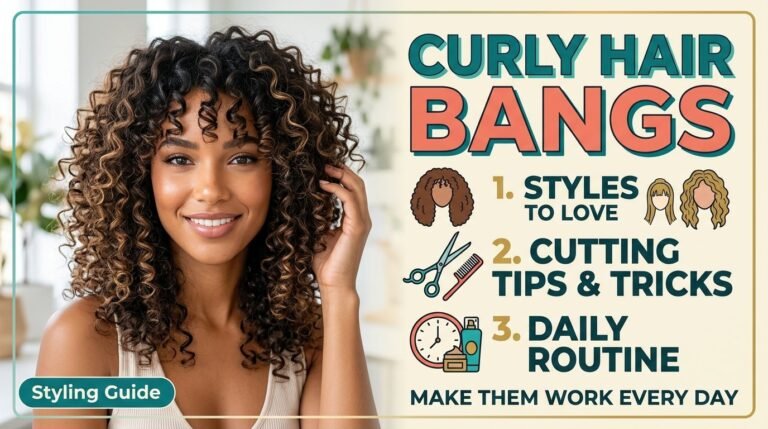
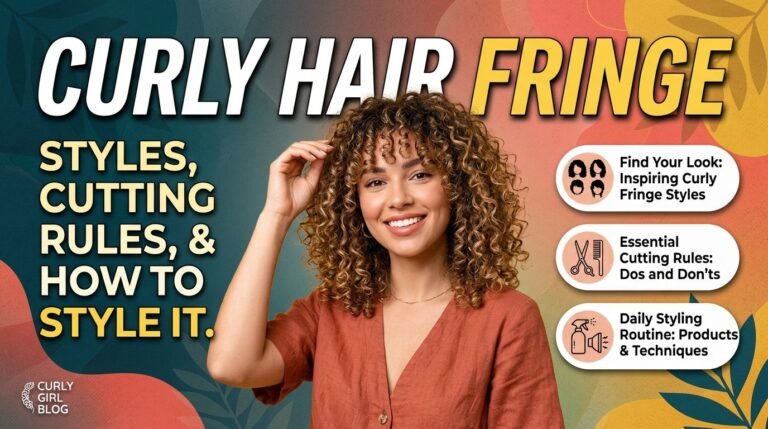
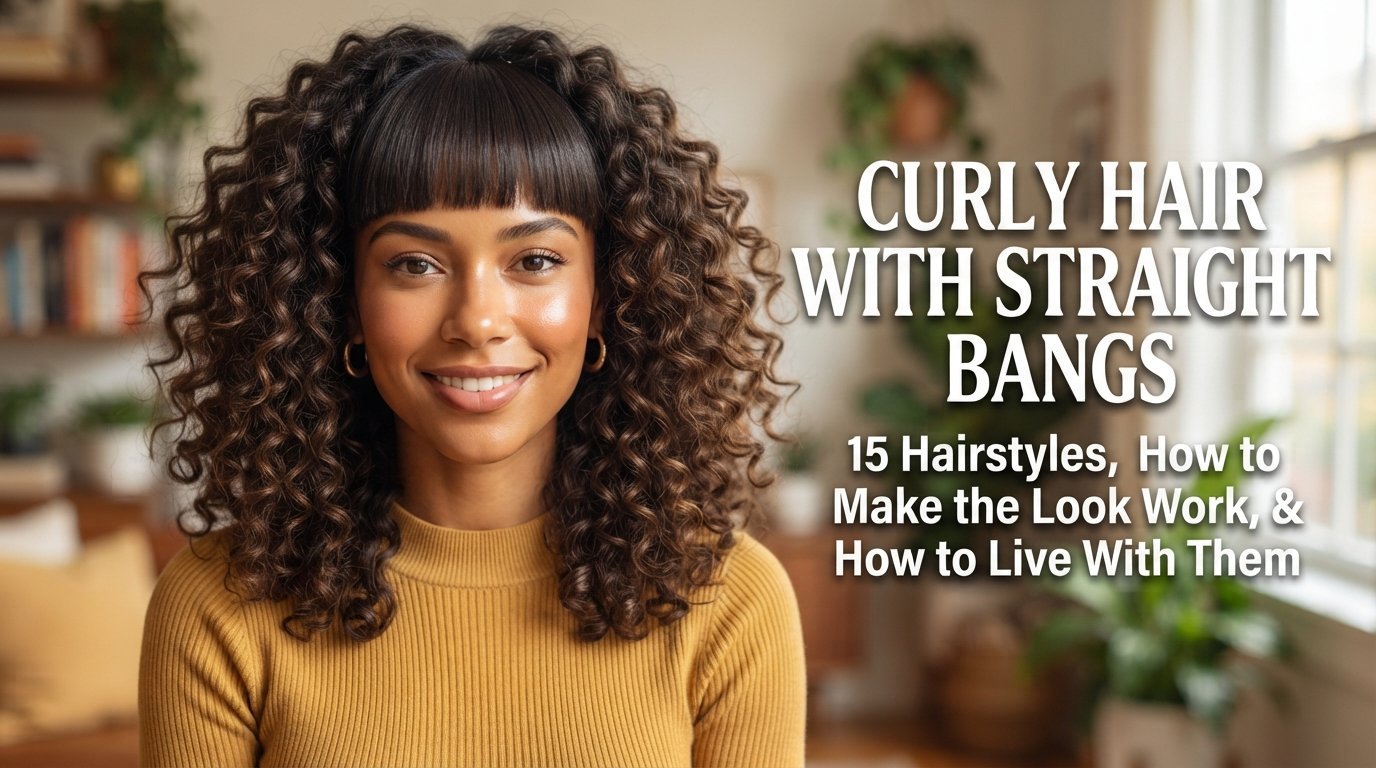
Curly hair with straight bangs is a deliberate contrast: springy texture below, a smooth fringe on top. It suits a wide range of curl patterns and face shapes. What separates a sharp result from an accidental one is the cut, how you dry the fringe, and how well the bangs blend into your curls.
Quick answer: Yes, curly hair can wear straight bangs. Ask a stylist who cuts curls to shape a fringe that blends into your layers, then straighten it with a blow-dryer and round brush, or a flat iron on dry hair, always using heat protectant. Expect a short daily styling step, because the fringe will try to curl back up.
Is This Look Right for You?
Straight bangs on curly hair are as much a routine as a haircut, so it helps to be honest about the trade-off.
It’s a good fit if you:
- Enjoy a two-texture look and don’t mind a few minutes of styling the fringe each morning
- Have a place in your routine for a mini flat iron or a blow-dryer with a small round brush
- Want something that frames the face without changing the rest of your curls
Think twice if you:
- Want a completely wash-and-go routine with zero heat
- Live somewhere humid and won’t carry anything to touch up the fringe
- Are already dealing with heat damage or breakage at the front of your hair
Want to test it first? Try a clip-in fringe in your shade, or pull a few front curls straight and pin them across your forehead for a day. It costs nothing and a+=09=nswers the “will I like this?” question faster than a mirror and imagination can.
How the Look Works (Useful When Briefing a Stylist)
Three things decide the outcome, and they’re worth naming in your appointment:
- The fringe section. How much hair goes into the bangs, and how wide they run. A section that’s too thick pulls volume out of your curls; one that’s too thin looks sparse once straightened.
- The blend zone. The area around your temples where straight hair meets curls. A soft, point-cut transition looks intentional. A hard step looks like two haircuts.
- The length. Curls spring up when they dry, but a straightened fringe hangs at full length. Your stylist needs to know how you’ll wear the bangs day to day so the length lands where you expect.
15 Curly Hairstyles With Straight Bangs
Each look below offers something different, whether that’s the cut, the curl pattern, the way it’s worn, or the mood. Use them as starting points and adjust to your own texture.
Related: Curtain Bangs for Curly Hair: How to Cut, Style, and Keep Them Looking Good
Short and Chin-Length Curly Hairstyles With Straight Bangs
1. Curly Bob With Blunt Bangs
A chin-length cut with the curls shaped into a rounded or gently angled outline, topped by a fringe that ends in a clean line at the brows. The appeal is the clash: a crisp edge above a bouncy perimeter. Soften the very edge of the fringe slightly so it doesn’t look drawn with a ruler.
Best for: people who like a precise, graphic outline and don’t mind frequent trims.
2. Curly Pixie With a Short Straight Fringe
Cropped curls on the sides and back, with a short, smooth fringe either swept across or resting just above the brows. Because the fringe is short, a few millimeters change the whole look. Ask your stylist to leave it slightly long at first and tighten it over later visits.
Best for: quick mornings. A short fringe takes seconds to smooth.
3. Curly Lob With Long, Side-Swept Straight Bangs
A collarbone-skimming cut with a long fringe parted deep to one side, sweeping across the forehead and melting into the curls near the temple. There’s no hard line across the brow, which makes this the gentlest version of the contrast.
Best for: first-timers who want to try straight bangs without a dramatic commitment.
Long and Layered Curly Hair With Straight Bangs
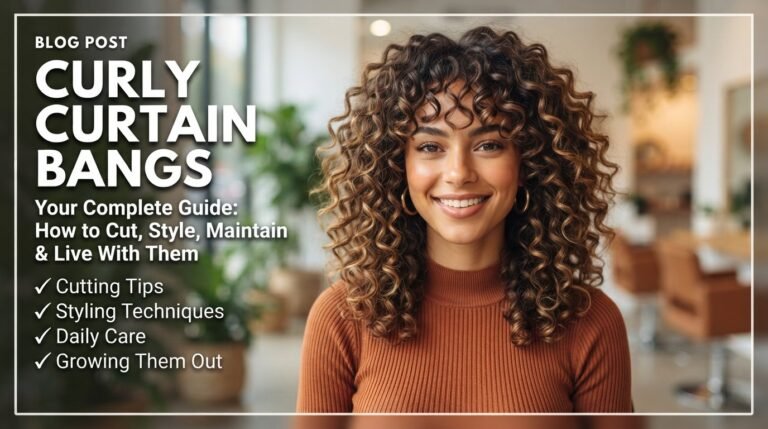
4. Long Layers With Straightened Curtain Bangs
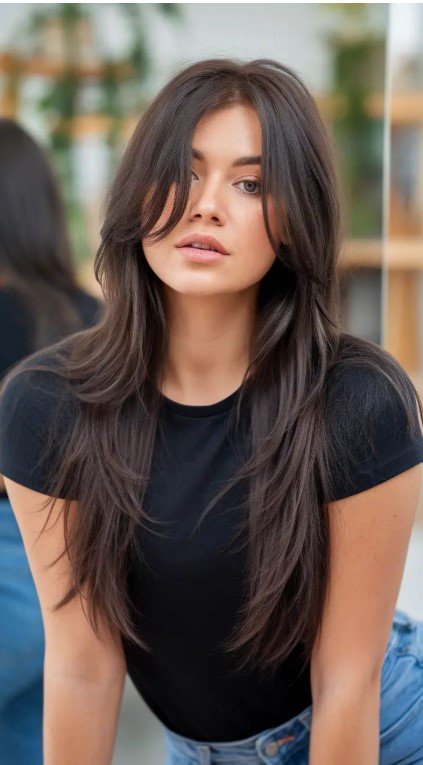
Curtain bangs part in the middle and sweep outward. Straightened, they frame the face like smooth brackets around full, bouncy curls. Dry each side with a round brush, rolling the hair away from your face, and ask for layers that start near the cheekbones so the ends of the fringe have somewhere to land.
Best for: a relaxed, retro-leaning feel, and as a bridge style if you’re growing a fringe out.
5. Shoulder-Length Curls With Wispy, See-Through Bangs
Thin, airy bangs that let a little forehead show through. With less hair in the fringe, it dries faster, needs less heat, and doesn’t weigh down the front of your style. The trade-off is that wispy fringes separate quickly with oil or sweat, so keep blotting papers or dry shampoo handy.
Best for: anyone wary of heat. Less hair means less time near the iron.
6. Big Spiral Curls With a Full, Brow-Length Fringe
Defined spirals with real body, plus a thick fringe that reads almost like a hat brim against all that volume. This is the high-contrast version, and it gets noticed. A fringe this full needs regular trims to keep its edge clean, and a lightweight shine serum helps it hold its own next to glossy curls.
Best for: thick hair and people who like a statement.
7. Curly Shag With Choppy Straight Bangs
Heavily layered curls with a fringe that’s deliberately a little uneven. The imperfection is the point: the bangs look lived-in rather than rigid, and because the ends are point-cut, the shift from fringe to curls is much less obvious.
Best for: people who find blunt bangs too formal.
Straight Bangs Across Different Curl Patterns
8. Loose Waves and S-Curls With Straight Bangs
When your texture sits between wavy and curly, the contrast with a straight fringe is softer and the daily effort is lower. A quick pass with a brush and dryer is often enough. This is the easiest version of the look to live with.
Best for: anyone who wants the effect with the least upkeep.
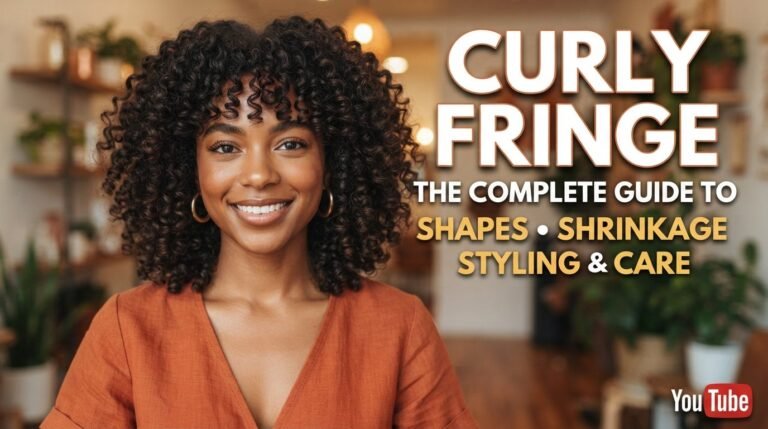
9. Tight Ringlets With a Long Straight Fringe
Tight ringlets shrink a lot as they dry, so a curl that hangs to the shoulder when stretched may sit well above it when relaxed. The same logic applies to the fringe in reverse: straightened, it hangs far longer than when it springs back. Bring photos and tell your stylist exactly how you’ll wear the bangs.
Best for: people who love a dramatic length contrast and have a patient, curl-savvy stylist.
10. Coily Hair With a Pressed Fringe
Defined coils or a twist-out with just the front section pressed smooth. Tightly coiled hair tends to be more prone to dryness and breakage under high heat, so plan this one with a stylist who works with your texture: a small section, heat protectant, medium heat, and no repeated passes. Many people get the same effect with a clip-in fringe so the natural hairline never sees a hot tool.
Best for: a polished contrast with a clip-in option for heat-free days.
Updos, Clips, and Protective Styles With Straight Bangs
11. Low Bun With the Fringe Left Down
Gather your curls into a sleek or softly undone low bun and leave the bangs out. The fringe becomes the single soft element in an otherwise tidy look. A little gel along the hairline helps the bun look finished rather than frizzy.
Best for: work, interviews, and formal events.
12. High Puff or Pineapple Ponytail With Straight Bangs
Curls gathered high on the crown, loose and voluminous, with the smooth fringe framing the face. The straight bangs keep the look from feeling too casual, and a light-hold spray helps them stay flat while you move.
Best for: active days, travel, and anyone who wants curls off the neck.
13. Half-Up, Half-Down With a Claw Clip
Top curls clipped back, lower curls left loose, fringe left down. The clip adds shape and height without much effort, and it gives you a quick fix when the rest of your hair isn’t cooperating.
Best for: everyday wear and second-day curls.
14. Braids or Twists With a Sleek Fringe
Box braids, cornrows, or twists paired with a smooth fringe, using either your own hair left out at the front or added hair. Raise it with your braider before the appointment, because the front hairline needs planning. A silk scarf at night keeps the fringe smooth between styling sessions.
Best for: low-manipulation weeks and long-wear styles.
Straight Bangs and Color
15. Curly Hair, Straight Bangs, and a Color Accent
A lightened face-framing section or a bold shade through the fringe pulls attention straight to it. The catch is that color and daily heat on the same small section are a tough pairing. Keep the shade within a gentle step of your natural color, consider semi-permanent options, and be strict about heat protection.
Best for: people who want the fringe to be the focal point.
How to Get Straight Bangs on Curly Hair
You have three realistic ways to straighten the fringe. Most people end up combining two of them.
Method 1: Blow-Dry on Damp Hair
This is the lowest-heat daily option and works best for wispy or curtain-style bangs.
- Separate the fringe from the rest of your hair and clip the curls out of the way.
- Apply heat protectant and a small amount of smoothing cream to the damp bangs.
- Dry with a small round brush or paddle brush, directing the airflow down and slightly away from your forehead.
- Finish with a blast of cool air to set the shape.
Method 2: Flat Iron on Dry Hair
Better for blunt or heavy fringes that need a sleeker finish.
- Make sure the bangs are completely dry, and apply heat protectant.
- Use a mini flat iron on a medium setting.
- Work in a small section, with one slow, even pass rather than several fast ones.
- Curve the iron slightly inward at the ends for a soft bend.
Method 3: Set Them Overnight
After washing, comb the bangs flat across your forehead, pin them in place, and wrap a silk or satin scarf over them. Sleeping on a smooth, flat fringe means less heat the next morning. It’s also a good option for days you want zero heat.
How to Get the Fringe Cut Right
- Choose a stylist who cuts curls regularly. Straight bangs on curly hair needs someone who understands how both textures behave.
- Show up with the fringe styled as you’ll wear it. That way your stylist sees the real length and weight, and can also check how the bangs sit when they curl.
- Start longer than you think you need. You can always shorten a fringe, but you can’t put length back.
- Ask for a soft blend at the temples. Point-cutting the edges avoids a visible step between the fringe and your curls.
- Size the section to your density. Pulling a thick triangle from far back can thin out the curls behind it. A narrower, lighter section often looks better.
- Leave the first big reshaping to a professional. Small touch-ups between visits are fine; a full re-cut at home is where most fringe regrets begin.
Related: Hairstyles for People With Bangs: What Works With Each Type of Fringe
Which Straight Bang Style Suits Your Face Shape?
These are starting points, not rules. Texture, density, and hairline matter as much as face shape.
- Round face: longer, side-swept bangs create length and avoid a heavy line across the middle of the face.
- Oval face: most styles work, so choose by lifestyle and the effort you want to put in.
- Square face: wispy or curtain bangs soften angles better than a stiff, blunt line.
- Heart-shaped face: curtain or side-swept bangs balance a wider forehead.
- Long face: a fuller, brow-length fringe adds width and shortens the visual length.
How to Keep Straight Bangs Straight
The three common enemies are oil, humidity, and sleep.
- Oil: The fringe rests on your forehead, so it picks up oil quickly. Wash just the bangs in the sink between full washes, use dry shampoo at the roots, and keep heavy moisturizer and sunscreen away from the hairline.
- Humidity: Seal the fringe with a lightweight smoothing product or a flexible-hold spray, and keep a mini iron or small brush for touch-ups.
- Sleep: Pin the bangs flat and wrap them in a silk or satin scarf so you don’t wake up with a dent or a curl.
Protecting Your Curl Pattern From Heat
- Use heat protectant every single time.
- Straighten only dry bangs with a flat iron, and use the lowest temperature that does the job.
- Limit the number of passes. Several passes over the same strands cause damage faster than one slow pass.
- Condition the fringe along with the rest of your hair, and deep condition regularly.
- Watch for warning signs: if the front curls look limp or don’t bounce back when you wash them, that section may be heat-damaged.
- Give them a break. Use a pinned or scarf-wrapped fringe on days when you don’t need a flat-ironed finish.
Common Mistakes to Avoid
- Cutting the fringe wet and short. Curls shrink, and what looked right wet can sit much higher once dry.
- Taking too much hair for the fringe. It can leave the curls behind it looking thin.
- Skipping the blend. A fringe with no transition looks like a separate haircut.
- Using the highest heat setting daily. It feels faster, but it costs you curl pattern.
- Layering heavy products on the fringe. Rich creams weigh bangs down and turn them greasy by lunch.
- Having no grow-out plan. Decide beforehand what you’ll do if you tire of the fringe.
Related: Bangs on Curly Hair: Which Styles Work, How to Get the Cut Right, and How to Live With Them
Growing Out Straight Bangs on Curly Hair
The awkward stage is real, since you’ll have straight hair in front and curls everywhere else. These steps make it bearable:
- Pin them to the side. Small clips or a headband keep the fringe off your eyes while it lengthens.
- Blend with curtain bangs. Ask your stylist to cut a gradual shape around your face instead of a straight line.
- Let the front start to curl. Skip the iron a few days a week to let the natural pattern return.
- Fold it into your layers. Once it reaches cheekbone length, face-framing layers can absorb the old fringe.
Frequently Asked Questions
Can curly hair have straight bangs?
Yes. It works on many curl patterns as long as the bangs are cut with your texture in mind and blended into your layers. Expect to straighten the fringe each day, or set it overnight.
Do straight bangs ruin your curl pattern?
Not if you use moderate heat and protect the hair. Repeated high heat on the same strands can loosen the curl in that section over time, so use the lowest temperature that works and give the fringe days off.
How often should I trim curly hair with straight bangs?
Fringes generally need more frequent trims than the rest of your hair. Many stylists suggest every four to six weeks, but follow your own hair’s growth and ask your stylist what suits you.
Should I cut curly bangs wet or dry?
Many curl specialists prefer cutting dry or checking the length dry, because curls shrink as they dry. For straight bangs, have them cut with the fringe styled the way you’ll wear it, and ask your stylist to check how it behaves when it curls.
Can I wear straight bangs without a flat iron?
Yes. A blow-dryer with a small round brush works for many people, and an overnight pin-and-scarf routine can keep the fringe smooth with very little heat.
How do I stop straight bangs from curling in humidity?
Seal them with a lightweight smoothing product, add a flexible-hold spray, and avoid touching them throughout the day. Carry a mini iron or a small brush for touch-ups if you live in a humid climate.
Final Thoughts
Straight bangs on curly hair take a bit of planning, but they reward it with a look that’s unmistakably yours. Pick the version that matches your texture and how much styling you’re willing to do, find a stylist who understands curls, and treat the fringe as its own small project. If you’re unsure, a clip-in test run costs far less than a regretful haircut.

Daniel Carter is the Senior Men’s Grooming Editor at FadeBuzzCut, where he specializes in fade buzz cuts, barbering techniques, men’s hairstyles, and evidence-based grooming advice. With more than 12 years of experience researching haircut trends, clipper techniques, face shape recommendations, and hair care, he creates in-depth guides that help readers confidently choose, maintain, and style modern buzz cuts.
Daniel works closely with experienced barbers, grooming professionals, and trusted industry resources to ensure every guide reflects current barbering standards and practical, real-world advice. His editorial approach combines expert research, clear explanations, and user-focused recommendations to make men’s grooming accessible for beginners and experienced enthusiasts alike.
At FadeBuzzCut.com, Daniel oversees editorial quality, content accuracy, and regular updates so readers receive reliable, up-to-date information on fade buzz cuts, beard combinations, hairstyle trends, clipper guard lengths, maintenance routines, and grooming products. Every article is written with a commitment to Experience, Expertise, Authoritativeness, and Trustworthiness (EEAT) while delivering helpful answers for both readers and AI-powered search experiences.
Whether you’re choosing your first fade buzz cut, comparing low, mid, or high fades, or looking for practical maintenance tips, Daniel’s goal is to provide trustworthy guidance that helps you achieve the best possible results.