Hairstyles for People With Bangs: What Works With Each Type of Fringe
Bangs change the job every other part of your haircut has to do. Put your hair in a ponytail and the fringe stays behind as a separate decision on your forehead. Wear it down and the bangs either melt into the layers around them or argue with them. That is why “what goes with bangs?” has no single answer, and why a style that looks effortless with feathery curtain bangs can look wrong with a heavy blunt fringe.
This guide sorts hairstyles by what you are actually working with: your type of bangs, your length and texture, and the kind of day you are dressing for. It also covers the things that tend to go wrong, like oily bangs, a stubborn cowlick, and the growing-out stage.
Quick answer: Nearly every hairstyle can work with bangs; the best match depends on the fringe. Soft curtain and wispy bangs pair with waves, layers, and half-up styles. Heavy blunt bangs look best with sleek lengths, low ponytails, and neat buns. Curly bangs need a dry cut and extra length.
Hairstyles for Each Type of Bang
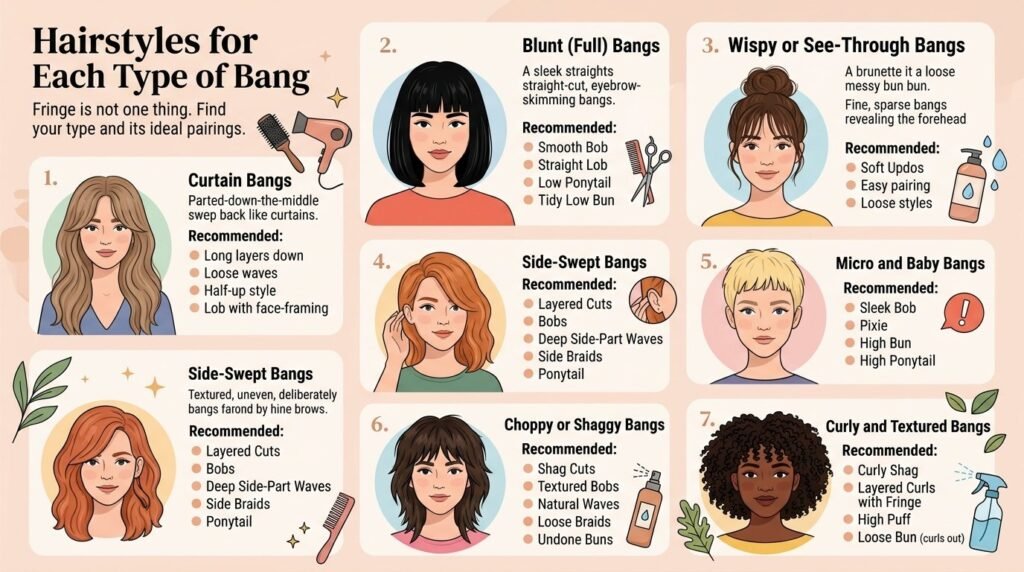
Fringe is not one thing. Find the type closest to yours, then treat the pairings below as a starting point rather than a rulebook.
Curtain bangs
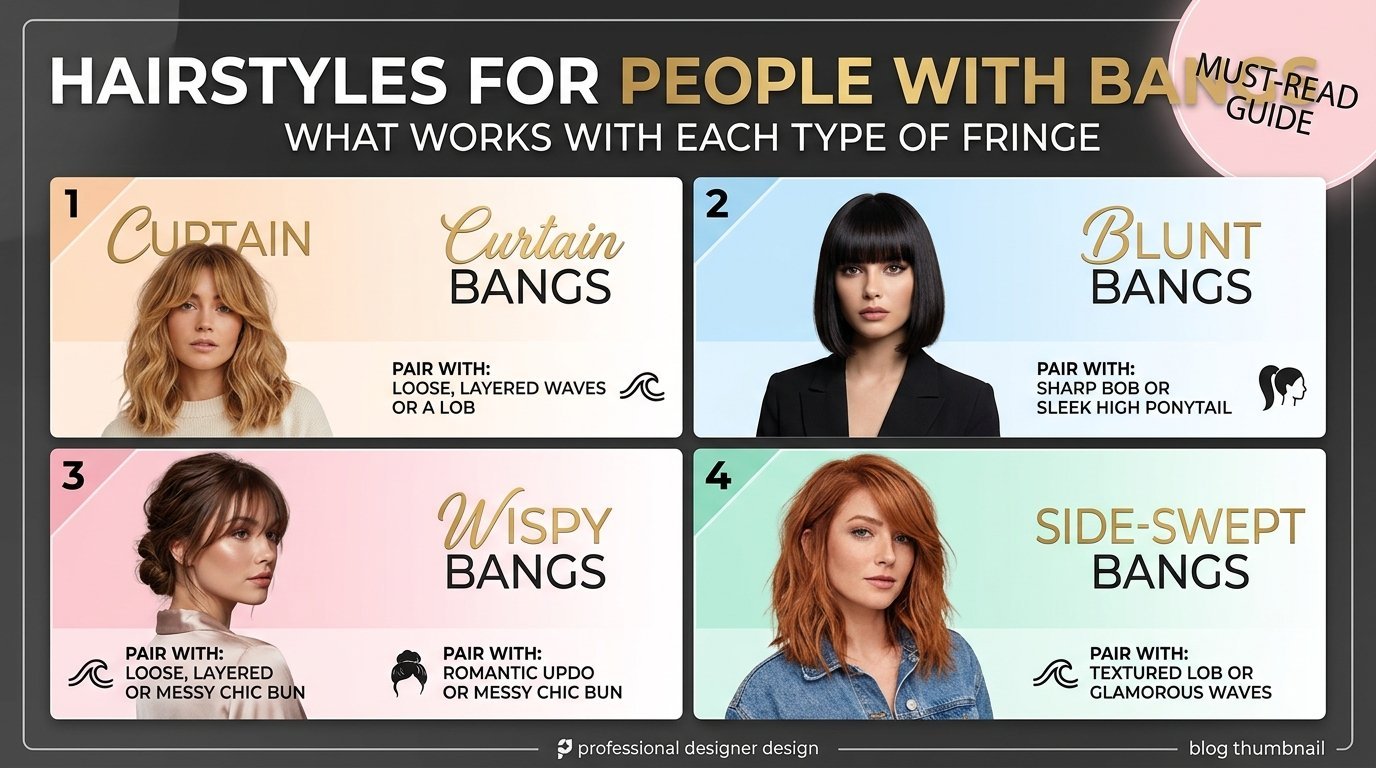
Parted in the middle and swept toward each side, curtain bangs are the most forgiving fringe because they blend into the hair around them instead of ending in a hard line. They look best with long layers worn down, loose waves, a half-up style that leaves the curtains loose, or a lob with face-framing pieces. A quick round-brush blow-dry gives them their sweep; left alone, they can drop straight over the eyes.
Blunt (full) bangs
Cut straight across, usually at or just above the brows, blunt bangs are the boldest everyday option and the hungriest for upkeep. Stylists generally note that the longer and blunter the cut, the more often it needs attention. Because the line is so graphic, it works best against clean shapes: a smooth bob, a straight lob, a low ponytail, or a tidy low bun. Very tousled styles can make the fringe look overdressed next to them.
Wispy or see-through bangs
Thin and light, wispy bangs let some forehead show through, which makes them the easiest to pair with almost anything. Updos look especially soft with them, and they feel less heavy in warm weather. The trade-off is that fewer strands means oil and forehead moisture show up faster, so they separate and look flat sooner than a thicker fringe.
Side-swept bangs
Longer and angled across the forehead from a side part, side-swept bangs are usually the least demanding type. They suit layered cuts, bobs, deep-side-part waves, side braids, and a ponytail with the fringe left to sweep across. As they lengthen they can be tucked behind an ear, which makes them a natural bridge between bangs and no bangs.
Micro and baby bangs
Very short and sitting well above the brows, micro bangs are a statement with nowhere to hide. They are at their best with a sleek bob, a pixie, or hair pulled into a high bun or ponytail, where a bare face and a sharp fringe do the talking. Since you cannot put length back, this is the type to preview with your stylist first.
Choppy or shaggy bangs
Textured, uneven, and deliberately messy, choppy bangs belong with shag cuts, textured bobs, natural waves, loose braids, and undone buns. The flaws are the point, which makes this one of the easier fringes to live with day to day.
Curly and textured bangs
Curls spring up as they dry, so a fringe that looks right wet can land much shorter. The usual advice from stylists who work with curls is to cut dry, start longer than you think you want, and angle the fringe rather than cutting it straight across, which can look boxy. Good partners include a curly shag, layered curls with a defined fringe, and a high puff or loose bun with the front curls left out.
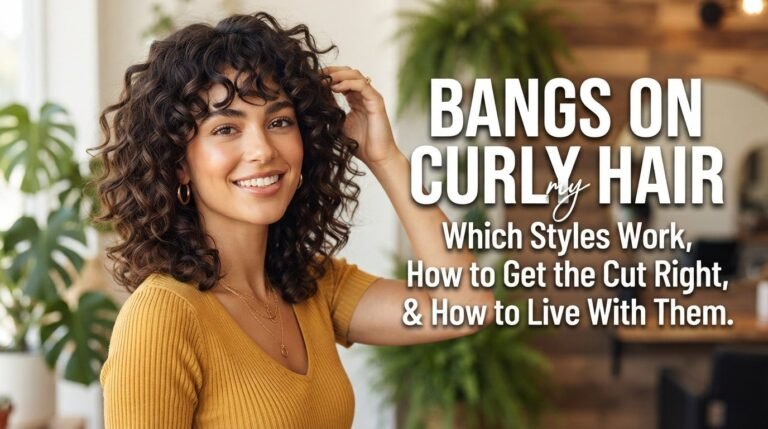
Related: Curly Hair Fringe: Styles, Cutting Rules and How to Style It
Pulled-Back and Updo Styles That Work With Bangs
Putting your hair up is where bangs either earn their place or become a nuisance. The simplest way to think about it: decide what the bangs will do. They can stay out as a frame, get pinned back, or blend into a sweep. Most bangs are too short to be tied into a ponytail, so clips and pins do the work when you want them gone.
- High ponytail with bangs out. A clean, lifted look that puts the fringe in the spotlight. Works especially well with blunt and side-swept bangs.
- Low ponytail. Softer and quieter. Leave a few strands loose at each temple so the face still has some framing beyond the fringe.
- Top knot or messy bun. Forgiving and fast. Choppy and wispy bangs suit it best, since the loose texture matches.
- Half-up, half-down. Probably the best partner for curtain bangs. Gather the top section at the back and let the curtains and lengths fall free.
- Braids. A single side braid flatters side-swept bangs; two braids with the fringe left out read youthful and casual. A small braid along the hairline can pin a long fringe out of the way.
- Claw clip twist. Twist the lengths up and leave the bangs and a few front pieces loose, or clip the bangs back with a small clip for a cleaner look.
- Headband or scarf. Pushes the fringe back for a retro feel. Paired with a vintage-style updo, it turns bangs into part of the period look.
One practical note: if the fringe starts looking flat or separated after you tie everything up, a light dusting of dry shampoo through the bangs usually pulls them back together without a rewash.
Which Haircuts Pair Best With Bangs, by Length
If you are choosing a haircut alongside the fringe, length shapes what is possible.
Long hair
Long layers and face-framing pieces give bangs a place to blend. Curtain and side-swept fringes are the easiest fit, while a long, straight, one-length cut looks sharpest with blunt bangs. Loose waves soften nearly every type.
Medium hair
Mid-length cuts are often called the sweet spot for bangs: short enough to style quickly, long enough that you are not trimming constantly to keep the shape. Lobs, shags, and layered shoulder-length cuts all take bangs well.
Short hair
Bobs are a natural home for bangs, blunt or curved. Pixies and cropped cuts pair with light, feathered fringe that echoes the texture of the rest of the cut. With short hair, keep the styling around the bangs simple so the fringe stays the focus.
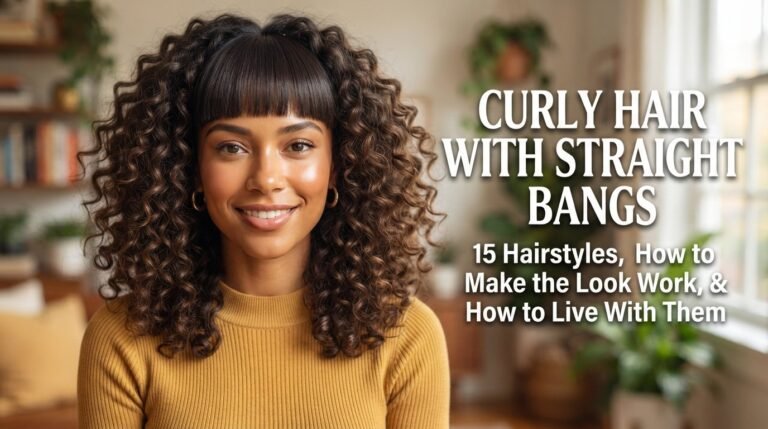
Related: Curly Hair With Straight Bangs: 15 Hairstyles and How to Make the Look Work
Hairstyles With Bangs for Your Hair Texture
- Straight hair: Shows blunt and sleek fringe at its sharpest. If bangs go flat, brush them side to side with a paddle brush as you dry them, then check the roots for lift.
- Wavy hair: Choppy, curtain, and shaggy bangs let waves do what they naturally do. Heavy, straight-across bangs often need heat styling to look intentional.
- Curly and coily hair: Longer, angled, dry-cut bangs and layered cuts that follow the curl pattern. Plan for a few extra minutes of styling, especially with curtain bangs.
- Fine or thin hair: Bangs come from the front section of your hair, so a full fringe can leave the rest of the style feeling sparser. Wispy, curtain, or side-swept versions take less hair.
- Thick hair: Blended or layered bangs add shape and movement, while a very heavy fringe can feel warm and bulky. Ask for it to be thinned or softened at the edges.
Does Face Shape Matter?
A little, though less than the internet suggests. Stylists commonly say that nearly anyone can wear bangs when the shape suits the face, jawline, and haircut. These are conventions people lean on, so use them as a starting point:
- Oval: The most flexible; most fringes work.
- Round: Side-swept or curtain bangs that open toward the sides tend to be more flattering than a short, heavy blunt fringe.
- Square: Soft, wispy, or curved bangs soften a strong jawline.
- Heart: Side-swept or curtain bangs balance a wider forehead.
- Long or oblong: A fuller, straighter fringe can visually shorten the face.
Your hairline, cowlicks, and how you actually wear your hair will often matter more than the shape of your face.
Hairstyles for Specific Situations
- Work or a polished day: A smooth low bun or sleek low ponytail, with the fringe cleanly parted or brushed across. It looks deliberate without trying hard.
- Gym or a long walk: Clip the bangs back or use a headband so sweat does not glue them to your forehead, and plan on refreshing them afterward rather than washing everything.
- Hot, humid weather: Lighten up. Thinner bangs stay cooler, and a pinned-back fringe avoids the sticking and oil that heavier ones pick up. Moisturizer and sunscreen can also make bangs greasy, so apply them first, let them settle, and then style the fringe.
- Dinners and events: A retro updo with a defined fringe, or curtain bangs with soft waves, photographs well and needs little fuss.
- Second-day hair: Braids and ponytails like a bit of texture, but bangs often do not last that long. Washing only the bangs fixes this.
Hairstyles for Growing Out Your Bangs
Hair grows about half an inch a month on average, so the typical grow-out takes around three to four months, longer if you want the bangs to blend fully into the rest of your length. Bangs do not grow faster than the rest of your hair; they just look like they do because the difference is easier to see.
The awkward in-between stage is easier with a plan:
- Side sweep: Part the bangs deeply and sweep them across the forehead.
- Tuck behind the ears: Once they reach cheekbone length, they can work as face-framing pieces.
- Half-up styles: Pin the longer front pieces into the back section.
- Headbands and clips: Hold the in-between length away from the eyes.
- Hairline braid: A small braid along the hairline keeps the fringe pinned and polished.
A stylist can also shape the front pieces into the surrounding layers partway through, which saves you from an unflattering stage.
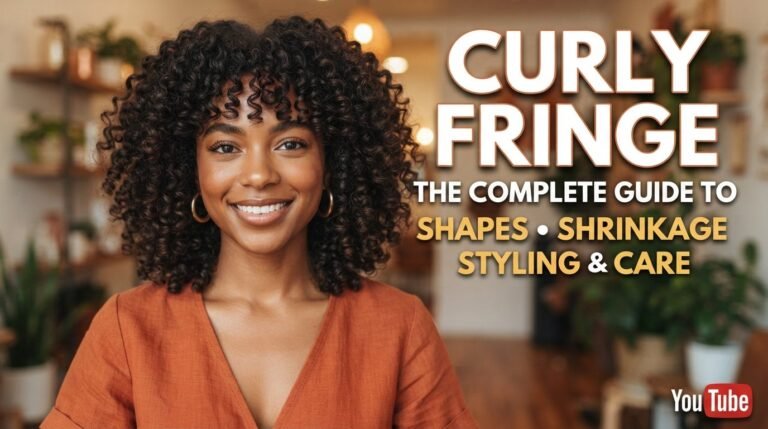
Related: Curly Fringe: The Complete Guide to Shapes, Shrinkage, Styling and Care
Fixing Common Problems With Bangs
- Oily bangs: Bangs rest on skin, so they pick up oil fast. Wash your face before styling, tie the rest of your hair back, and rinse only the fringe when needed. Dry shampoo on the roots before you leave the house helps, and brushing constantly can make things worse.
- Bangs that separate: Forehead oil is a frequent cause. Wash your face first, then dust dry shampoo through the fringe and work it in with your fingers. Stylists often prefer it to hairspray, which can stick strands into clumps.
- A cowlick at the hairline: Keep the fringe longer and slightly heavier, since weight helps hold it down. Style it from damp to dry, blow-drying against the direction it wants to grow. A short, straight-across fringe will fight it; side-swept or curtain bangs usually cooperate.
- Flat or limp bangs: Brush them left to right as you dry them, then avoid piling on product.
- Bangs that shrink after a cut: Always ask for a longer starting point. You can take more off, but you cannot add it back.
What to Tell Your Stylist Before You Cut
- Show the whole hairstyle. Bring photos of the bangs and of how you plan to wear your hair most days, up or down.
- Say how much time you have. Blunt and curtain bangs require daily styling; side-swept bangs are more relaxed.
- Ask about your hairline and cowlick. A good stylist will check your crown and hairline before deciding on a shape.
- Request a preview. Many stylists can hold the hair in place to show roughly where the bangs will land.
- Start long. Trim in stages until the length feels right.
- Ask about upkeep. Short and blunt bangs need frequent trims, and a common recommendation is every four to six weeks for curly bangs.
Frequently Asked Questions
Can you wear a ponytail or bun with bangs?
Yes. Most bangs are too short to tie back, so they stay out as a frame or are pinned with a small clip. A bit of dry shampoo keeps them from flattening or splitting through the day.
Do bangs work on fine or thin hair?
Usually, in lighter versions such as wispy, curtain, or side-swept bangs. A full blunt fringe uses a lot of the front hair, which can make the rest of the style look thinner, so ask your stylist to base the cut on your density.
How do I keep my bangs out of my eyes?
Sweep them to the side with a clip, push them back with a headband, or braid them along the hairline. If they keep falling into your eyes, a small trim is the simplest fix.
How long do bangs take to grow out?
About three to four months for most styles, based on hair growth of roughly half an inch a month. Fuller fringes and fully blending into long hair can take longer.
Are bangs high maintenance?
It depends on the type. Longer, side-swept, and curtain bangs ask for less than short, blunt ones, which need more trims and more frequent washing and styling.
Can I get bangs if I have a cowlick?
Often, with the right type. Longer, softer, or side-swept bangs tend to work better than a short straight-across fringe, and the stylist should see your hairline before choosing.
The Bottom Line
Pick the bangs first, then build around how you actually wear your hair. If your mornings usually end in a ponytail, choose a fringe that looks good on its own. If your hair is usually down, choose one that blends into the layers. The best hairstyle with bangs is the one you can recreate on a regular Tuesday.

Daniel Carter is the Senior Men’s Grooming Editor at FadeBuzzCut, where he specializes in fade buzz cuts, barbering techniques, men’s hairstyles, and evidence-based grooming advice. With more than 12 years of experience researching haircut trends, clipper techniques, face shape recommendations, and hair care, he creates in-depth guides that help readers confidently choose, maintain, and style modern buzz cuts.
Daniel works closely with experienced barbers, grooming professionals, and trusted industry resources to ensure every guide reflects current barbering standards and practical, real-world advice. His editorial approach combines expert research, clear explanations, and user-focused recommendations to make men’s grooming accessible for beginners and experienced enthusiasts alike.
At FadeBuzzCut.com, Daniel oversees editorial quality, content accuracy, and regular updates so readers receive reliable, up-to-date information on fade buzz cuts, beard combinations, hairstyle trends, clipper guard lengths, maintenance routines, and grooming products. Every article is written with a commitment to Experience, Expertise, Authoritativeness, and Trustworthiness (EEAT) while delivering helpful answers for both readers and AI-powered search experiences.
Whether you’re choosing your first fade buzz cut, comparing low, mid, or high fades, or looking for practical maintenance tips, Daniel’s goal is to provide trustworthy guidance that helps you achieve the best possible results.